Fakarava to Tahiti

We were up at 5AM to exit via the south pass at sunrise and, theoretically, just after slack (high) water. At the shallowest part of the pass the ebb current was already running three to four knots. The overfalls were not too bad, but outside the pass the wind and swell meeting the out flowing water made for a nasty washing machine!

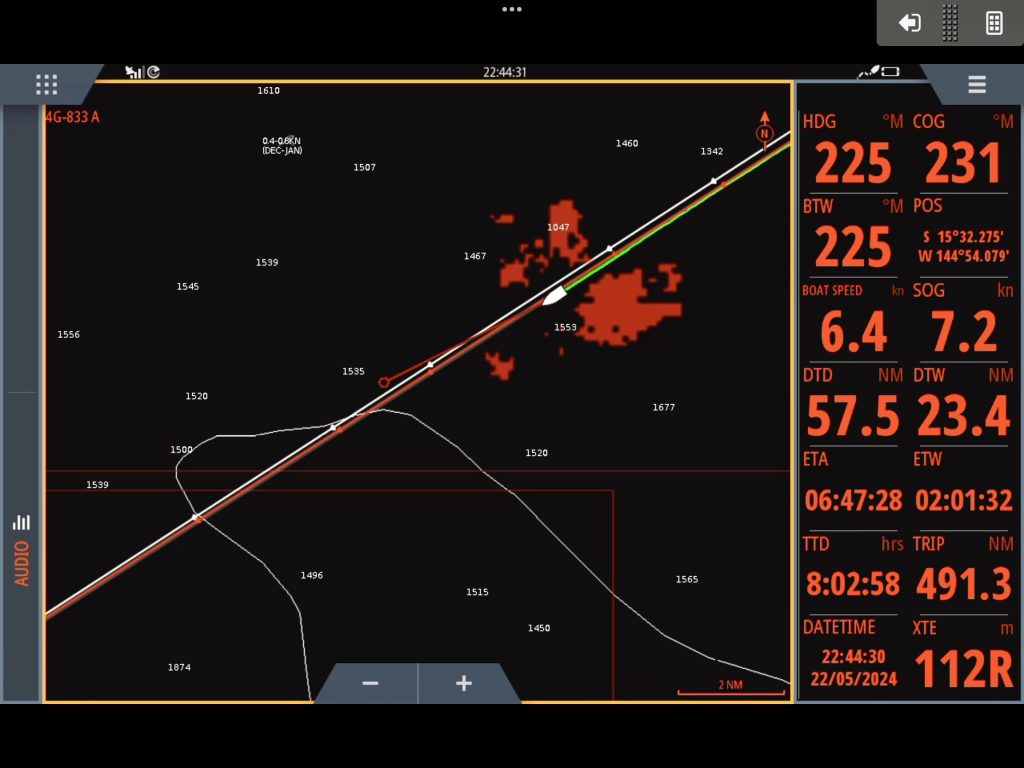
The sea state was lumpy all day yesterday – short and steep 2m waves less than 5 seconds apart. Not at all what the forecast promised. At least the wind was fair, 15 to 20 knots from behind, and we have averaged better than 7 knots all day, making a daylight landfall in Tahiti potentially doable.

Our clear plastic cockpit enclosure is beginning to show its age. One of the issues is that the white thread used by the sailmaker to sow all the white zips to the canvas is not UV proof and is now simply disintegrating. A section of about half a meter let go today, but fortunately Maria is a dab hand with the hand stitcher!
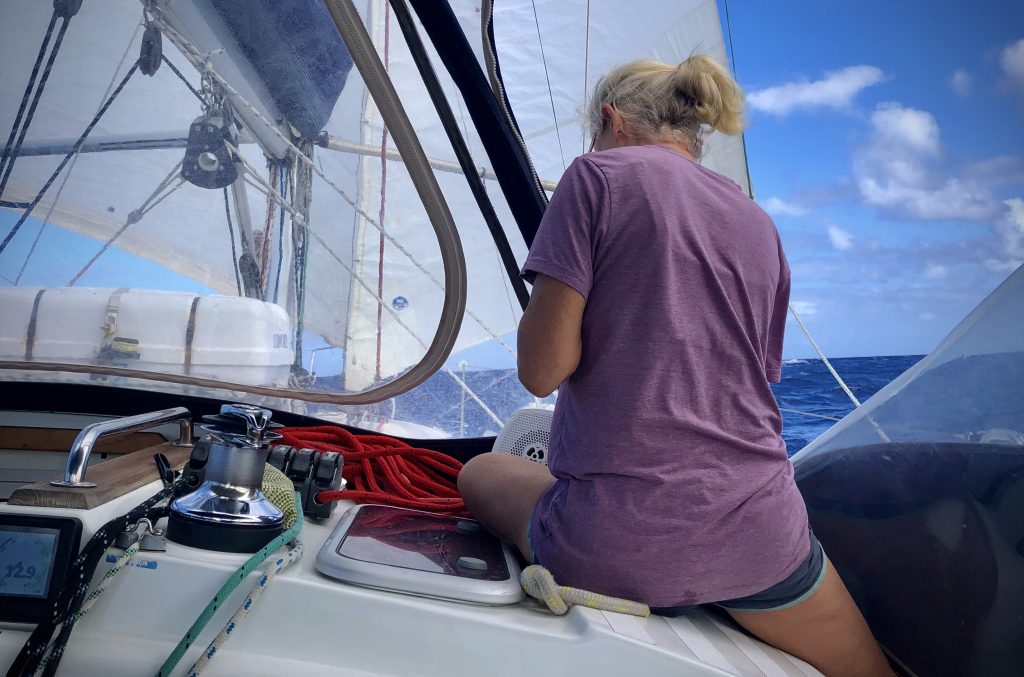
A few cloud fronts passed over in the night, but mostly countered the trade wind, resulting in less wind rather than more.

Around the middle of the day the wind just up and died, just after a light rain shower. Once our speed dropped below 2.5 knots I couldn’t stand it any longer, so the engine was started and we motored the last 5 hours to Tahiti. A bit of a disappointment as it was looking good for getting here in daylight under sail. We doused the two foresails and stowed the two poles and then rolled out the genoa on the starboard side to get a little push from the very light wind (about 5 knots) on our beam. Thus we motor-sailed until we got a mile or so away from the anchorage.

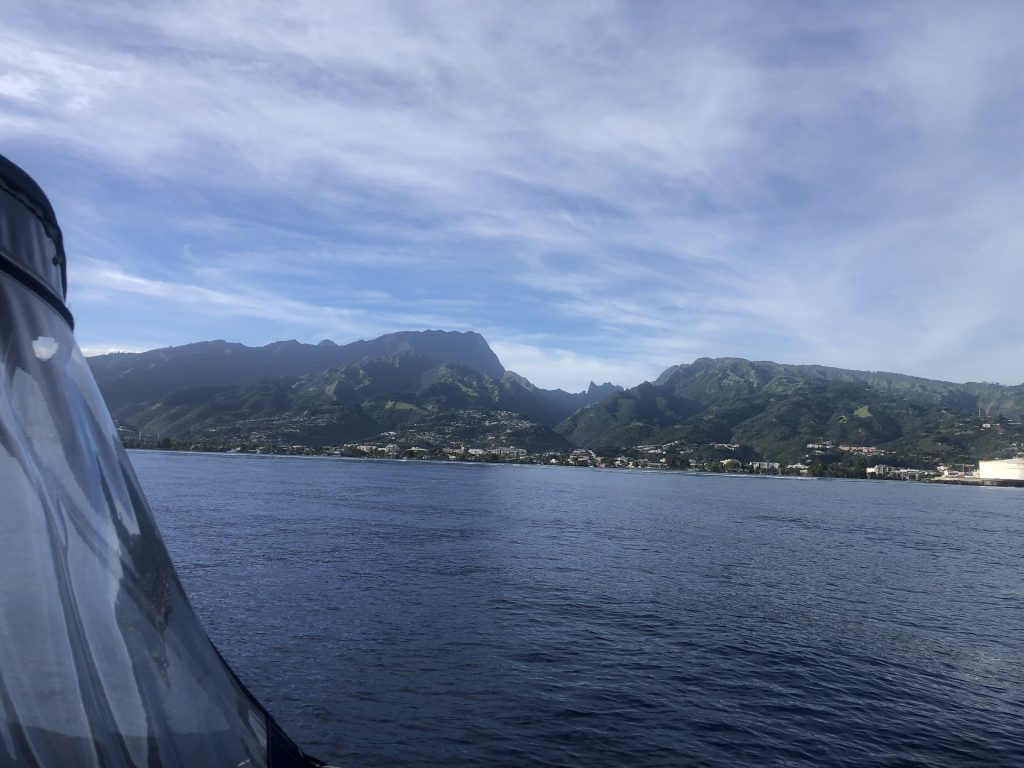
The night entry into the anchorage was not particularly difficult, but we had to pay attention as there were three boats here already. We let go the anchor in 9 metres and put out 50 metres of chain. The bottom here, behind Pointe Venus is apparently black sand from the volcanic formations, with good holding. Our anchor set solidly straightaway, and the anchorage was surprisingly calm and surge free, making for a good night’s sleep.
South Pass at Fakarava Atoll, Tuamotus

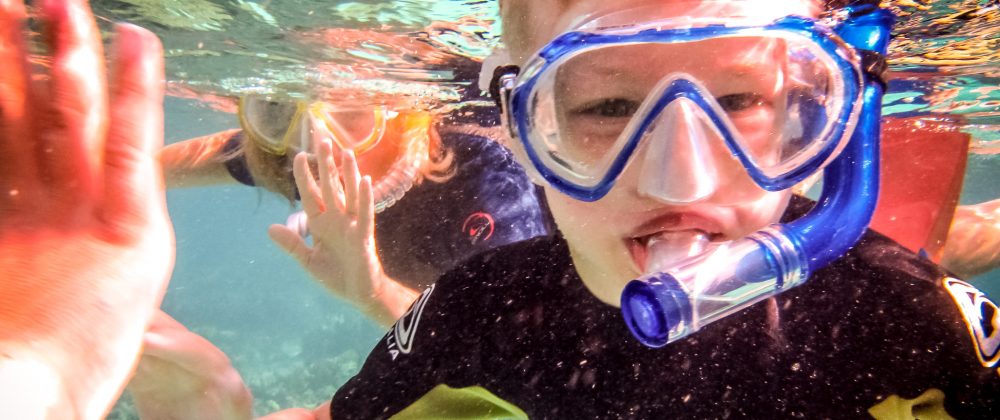
We spent three days anchored at the south pass at Fakarava. Our initial attempt at anchoring was abandoned when I snorkeled to check the anchor and found that the area was traversed by cables from a long-abandoned pearl farm we moved half a mile east and found a nice sandy patch. We went for a snorkel around the boat and were immediately targeted by the Remora fish, assuming were sharks due for a clean I guess!

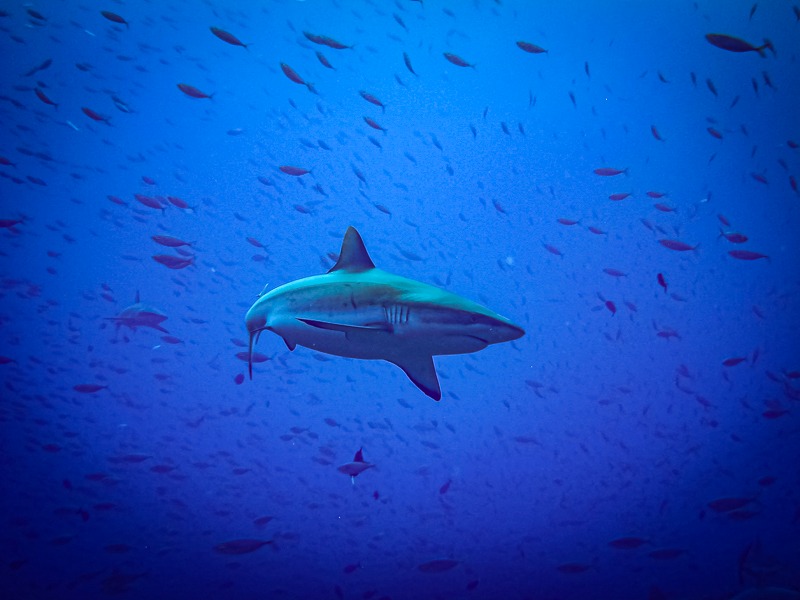
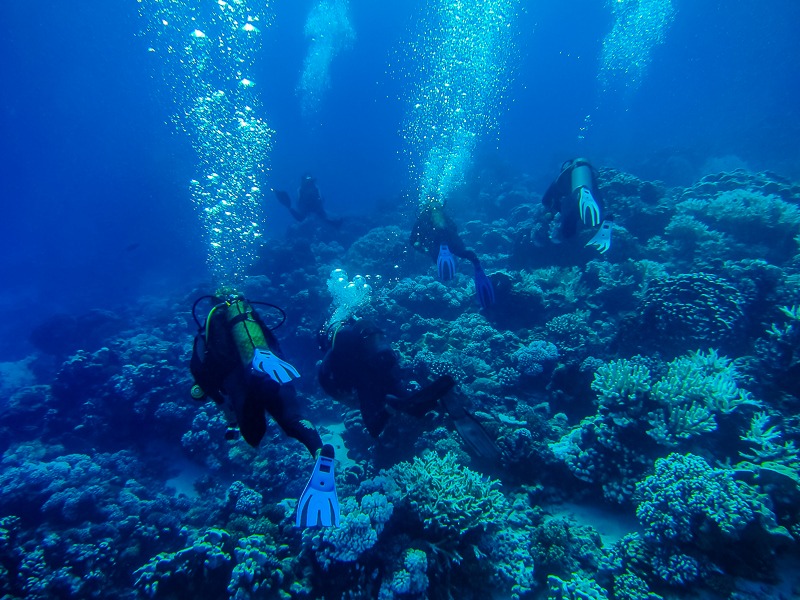
I managed to join Enata Diving for a two-tank drift dive through the pass, which turned out to be a top experience and worth every penny. The pass is 30m deep in places and they fill the tanks with nitrox as a matter of course to avoid all the mucking about with decompression stops and bottom time limits that would come into play with two relatively deep dives in close succession. Technicalities aside, the dive was truly spectacular: literally hundreds of sharks cruise the pass, mingling with gigantic napoleon wrasse, manta rays and too many other species to mention.

I was privileged to have Jacqueline Evers from The Netherlands as my dive buddy. She is truly inspiring, solo sailing around the world in her 27-foot sloop.

Yesterday Maria and I went back in the dinghy and snorkeled the edge of the pass twice, drifting with the dinghy in tow. A great experience as the colours are always better in the shallow water. The sides of the pass are really steep, so we could see all the way to the bottom. No shortage of sharks either!

Sailing to the Tuamotus

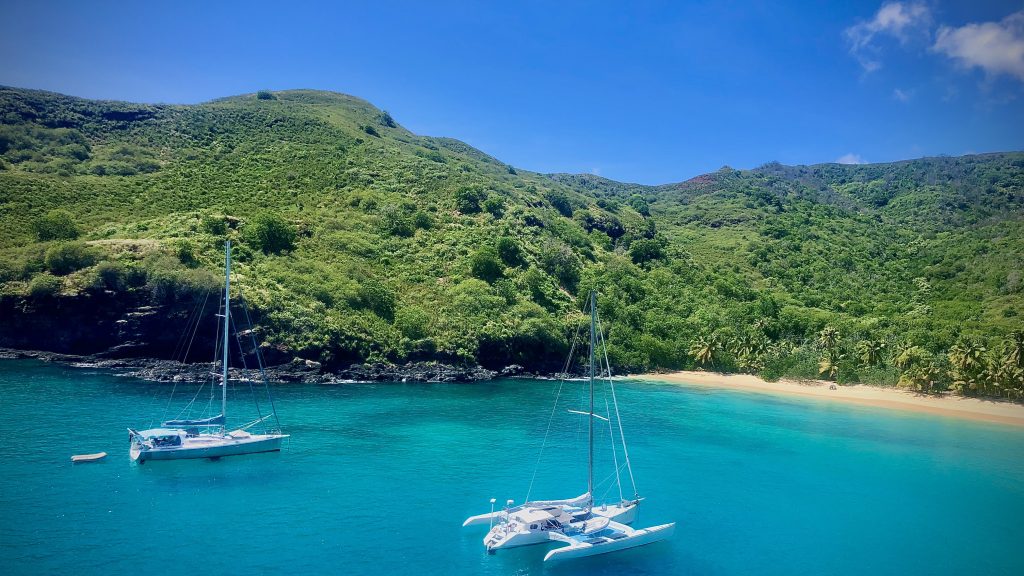
We spent a very pleasant four days here at Hanamoenoa Bay on Tahuata Island, only two hours mototoring from Atuona, Hiva Oa. Our main objective, scrubbing Sunny Spells’ bottom, was achieved in the first two days. It was not as bad as I had feared, but she still has a big bottom to scrub! The diarrhoea-yellow algae above the waterline I had rubbed off while we were still in the harbour at Atuona.

The snorkeling here was a little disappointing. Visibility was about 10m over sand, and the reefs are very degraded. There is virtually no coral in the bay. I headed out towards the northern headland where there is said to be a few manta rays, but stopped short as there was a bit of a current running out to sea and I did not have the dinghy with me.

I went up the mast to check out the rigging and lubricate all the stainless fittings with a thin film of WD40. Fortunately, everything checked out fine. I was treated to this drone-like view from the top of our 18m mast.

The plan for our next leg to Fakarava was to do a little detour south of the rhumb line to give us a better wind angle the last day or so when the winds are forecast to be a bit stronger.

The passage started with motoring as there was zero wind. I nearly turned back to Tahuata as the prospect of 3 days motoring, as forecast by two of the models, appeared to have materialised. Fortunately, the wind soon picked up and we were reaching with just the large #2 genoa for a few hours before setting the two poles as the wind started going aft of the beam.

The bottom scrub has paid dividends, as Sunny Spells is quick to accelerate in the light breeze. The sea state was generally very pleasant, with a long period ground swell of about 1.5m from the south on our starboard bow and very little by way of wind wave on top.

The weather on this passage turned out to be flaky, with both wind speed and direction changing a lot and quickly. We are in a transition zone between the southern winter weather nasties and the equatorial trade winds. There’s also a weak trough in this area, so lots of little cumulus that upset the wind direction and speed and threaten to rain. Here, we are between two squalls with 25 knots of wind on a broad reach, making 6 to 7 knots, only have 58 miles to go to the north pass at Fakarava Atoll.

We arrived at the north pass into Fakarava Atoll around 9:30AM, and just motored straight in without any current, turbulence or other nasties. We proceeded to the town anchorage at Rotoava village and briefly went ashore (after inflating the Zodiac) to pay the tourist tax.

Around midday we started motoring south inside the atoll and anchored at Kaukuraroa for the night, about halfway to the south pass anchorage. I’m hoping to arrange a drift dive through the south pass for Saturday, so that’s where we’ll be heading tomorrow.

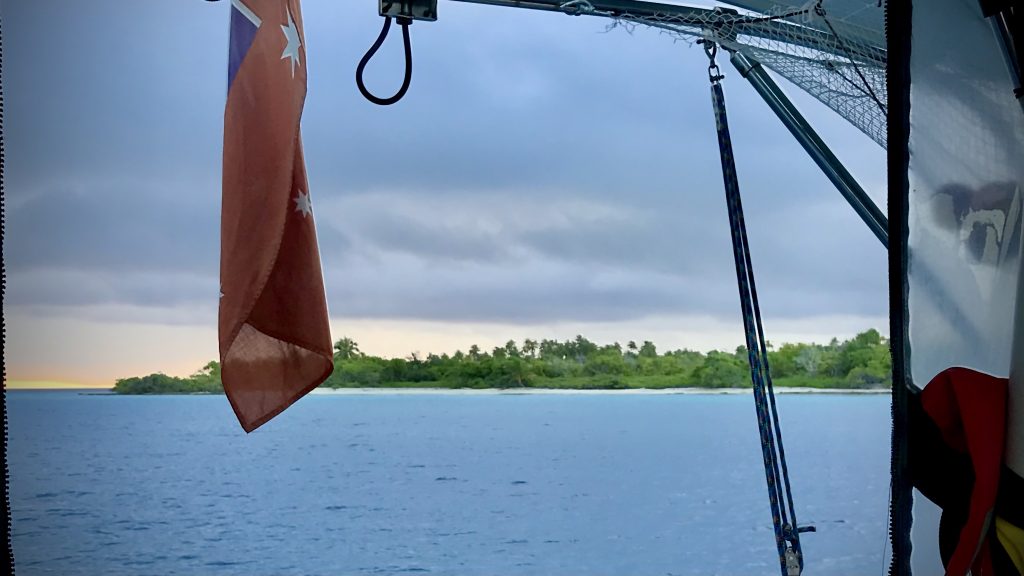
We are the only boat here in the anchorage and we cannot see any other boats out in the atoll or buildings/people on land. Quite surreal after the crush of boats everywhere in the Med, Caribbean and even Hiva Oa. We sat on the back watching the sun set in the west, with a couple of manta rays surfacing over the reefs about 250m away. The real deal…