Landfall in the Marquesas

It’s done. The anchor is down in Atuona Bay, Hiva Oa, and Sunny Spells is at rest after 3,100 nautical miles of Pacific blue. I’m writing this from the cockpit, a bit weary, but full of that landfall glow — the deep kind, the earned kind.

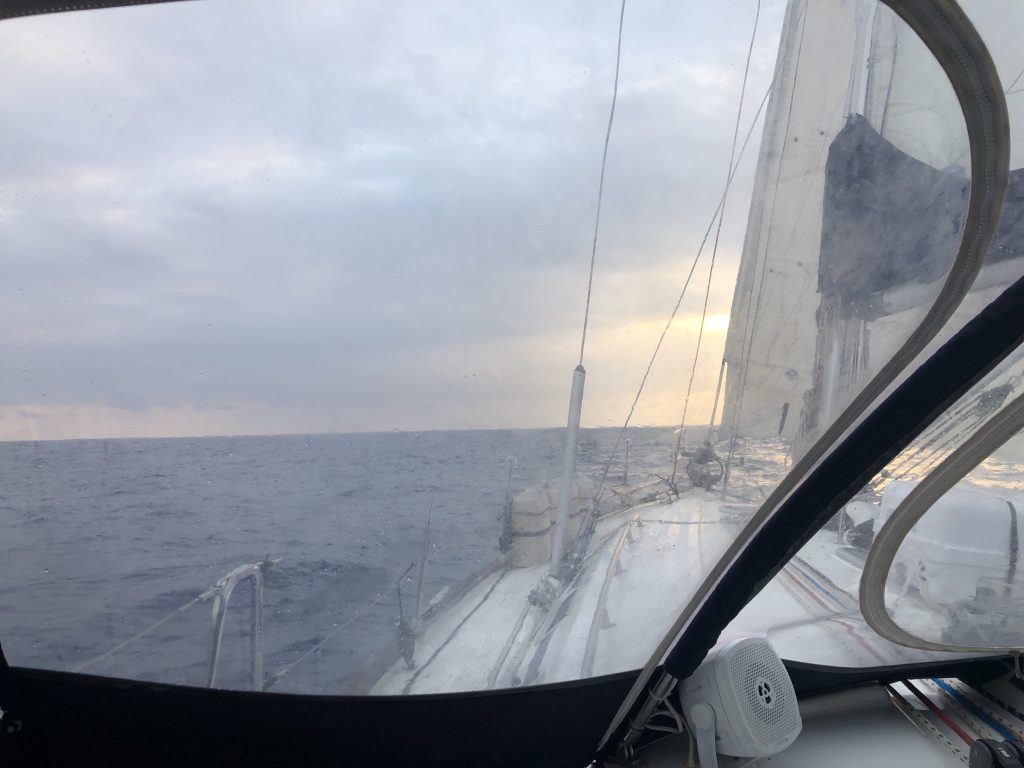
The last few days, from the 5th to the 9th, reminded us that the ocean always has a final test. After more than a week of almost dreamlike sailing in the trades, we had to start making our turn to port to line up for Hiva Oa — and that meant putting the wind and sea more on the beam. Not uncomfortable exactly, but a bit more lively than we’d gotten used to.
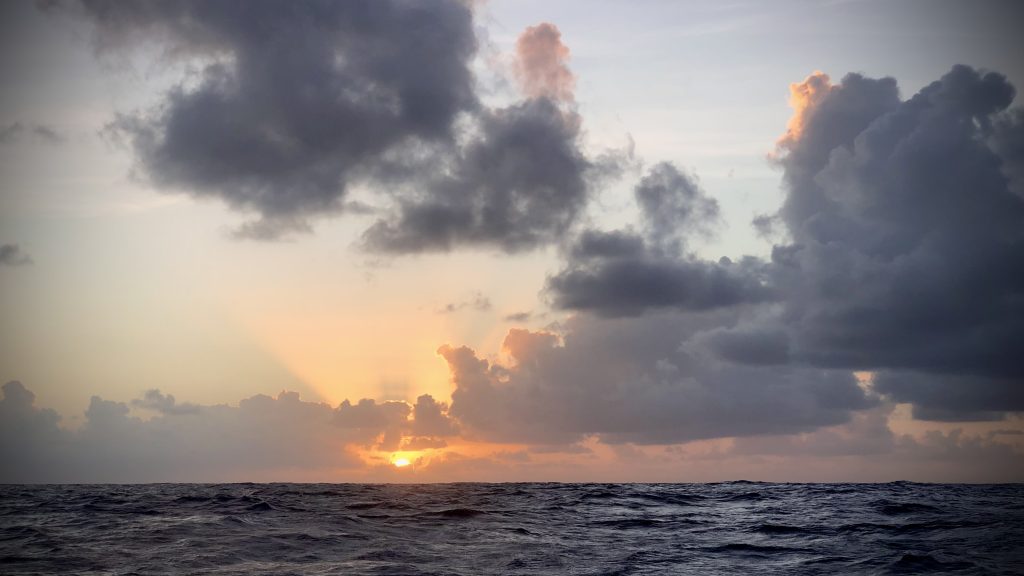
The swells picked up a little — long, lumpy, and off-angle — which meant a lot more motion and the kind of interrupted sleep that makes you feel like you’ve been sailing for weeks (which, of course, we had). But the boat just kept trucking. Even with the shifting seas and slightly fresher breeze, Sunny Spells held 6 to 7 knots like it was nothing.
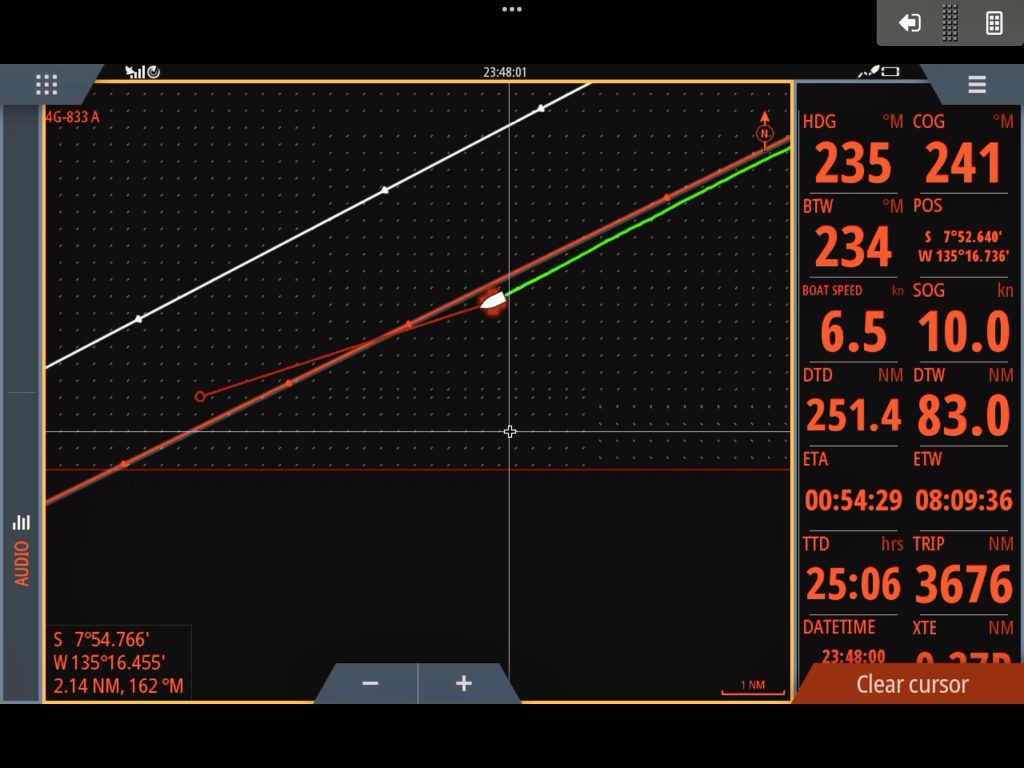
Screenshot as we hit 10 knots SOG on a nice long surf. We are not having trouble keeping the pace up at the moment!

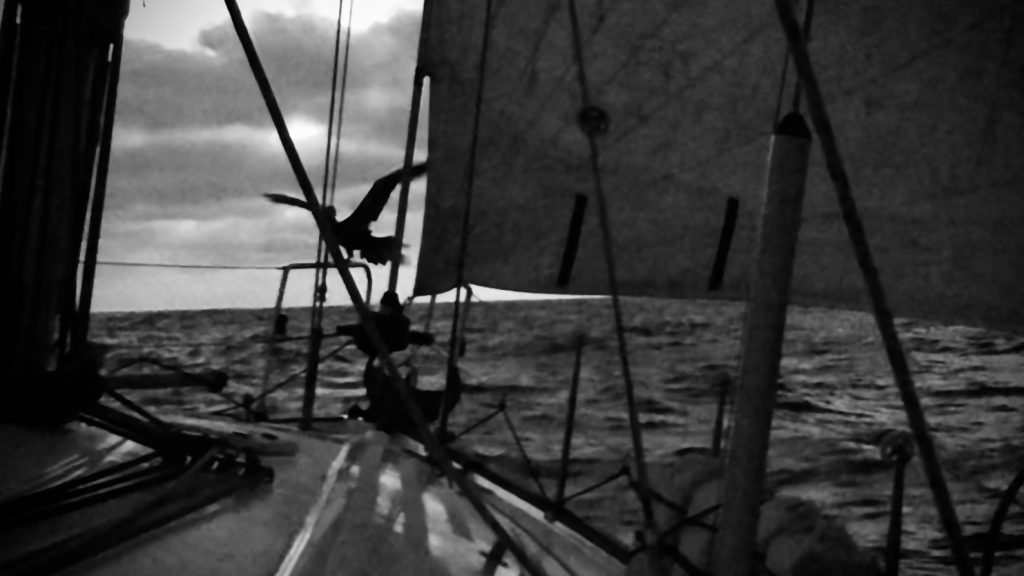
By the morning of the 8th we could feel it — that almost physical sense of arrival. The air smelled different. The breeze felt warmer. There were birds again, real ones, not ocean wanderers but locals. One tiny land bird even flew aboard for a quick inspection before flitting off toward nowhere. We knew land was close.

Then, just before first light on the 9th, there it was: a jagged silhouette on the horizon. Hiva Oa. Real land. We were still 20 miles out, but it was as if the crossing had ended the moment we saw it. Everything after that was ritual — sail trim, coffee, unlashing the anchor, switching off the ocean mindset and thinking about land and shoal water.
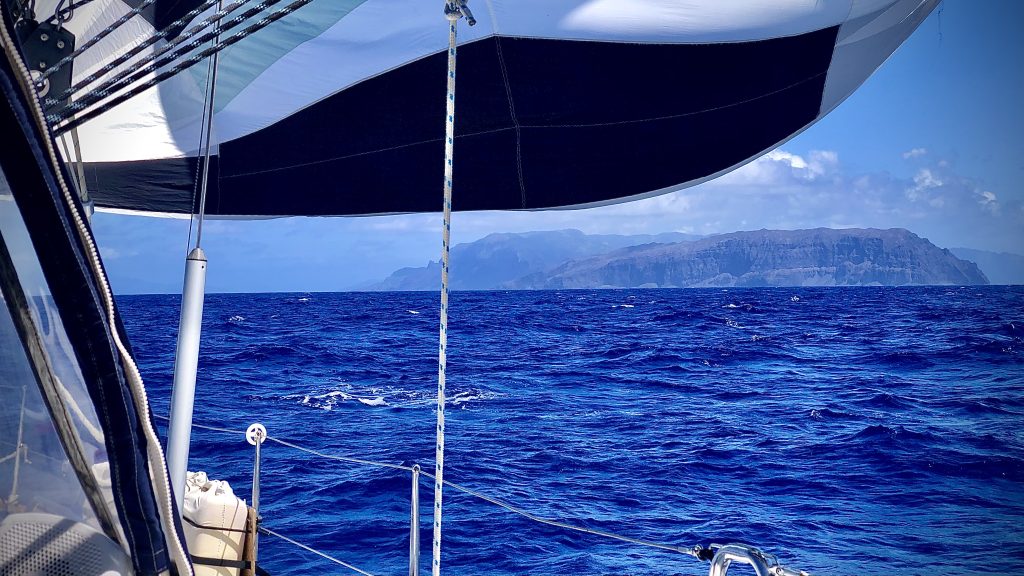
We rounded into Atuona Bay around 10AM. Mountains rising behind the anchorage, lush and sharp-edged, like something drawn from memory. The shoreline was dark volcanic rock, fringed with surf. A few other yachts gently swinging at anchor, and the smell — damp greenery, woodsmoke, soil. It’s always the smell that hits first.
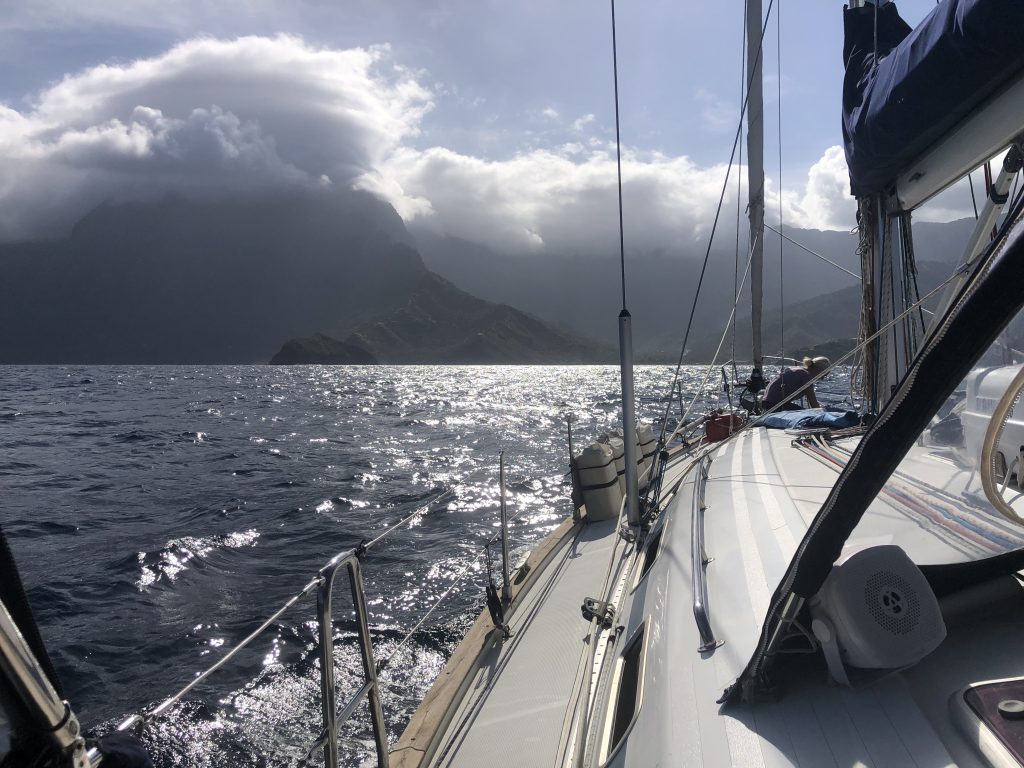
We dropped anchor in about 9 metres, engine off, boat still. Just like that, the Pacific crossing was over.

There’ll be more to come — check-in, laundry, fruit, a baguette if we’re lucky — but for now we are just soaking up the stillness.

Sunny Spells carried us well. And now she rests.
Back in the Groove

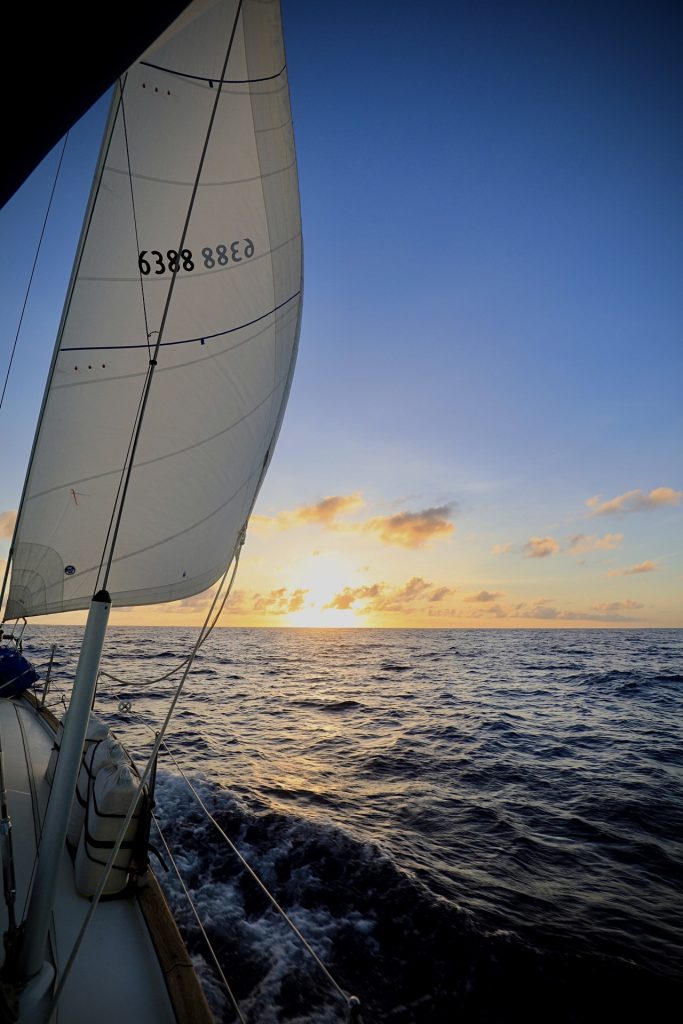
We’re finally sailing again — properly sailing — and what a relief. After the chaotic stillness and squall-dodging of the past week, Sunny Spells is back in her element, humming along with 10 to 14 knots over the beam and a big blue swell behind us. The trades have returned. The days from 28 April to now have been, in a word, restorative.

It’s that glorious stretch of ocean where the wind is just enough — not too much, not too little — and the boat settles into its stride. We’ve been mostly on a beam reach or broad reach, full main and big genoa, averaging 6.5 to 7 knots with barely a hand laid on a winch. The autopilot is content, the sails are happy, and so are we.

We’ve passed a few waypoints that felt more symbolic than geographic — halfway from Galápagos to the Marquesas, 1,000 miles to go, 750… They’re just numbers, but they change the mood. The South Pacific feels real now, not just an idea on a chart.

With good sailing comes better living. We’ve been sleeping deeper, eating better, and catching up on all the small tasks that pile up when you’re too exhausted to care. A few more firmware tweaks to the displays, some overdue cleaning. Amazing what you feel like doing when you’re not battling squalls or running on 3 hours of sleep.

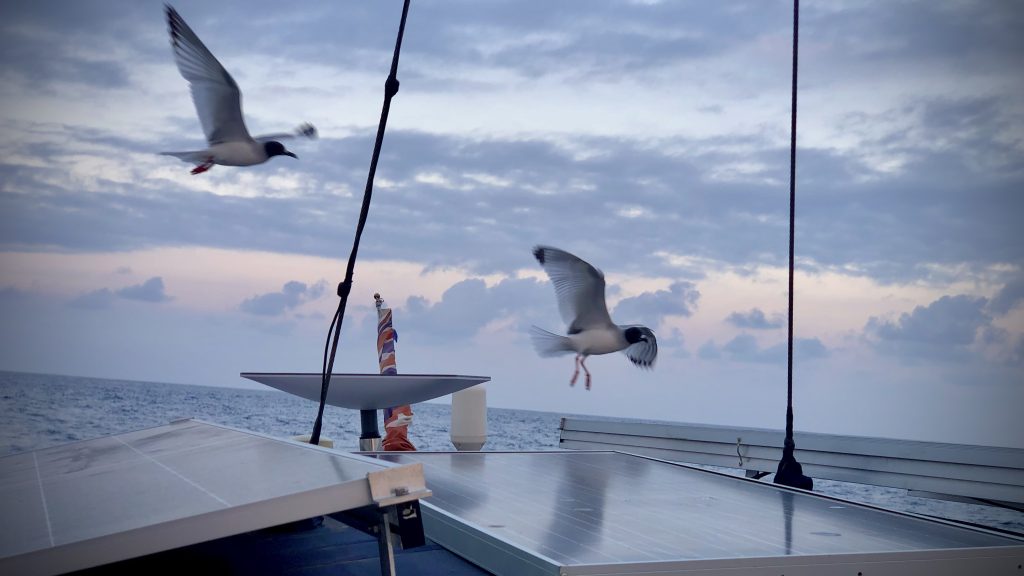
The sea is calmer now too — long, slow swells and the occasional splat from a flying fish. We’ve had a few bird visitors again, though not as bold as the Galápagos gang. Just a noddy or two doing fly-bys at dusk, silhouetted against soft pink skies.

The miles are slipping by now. Most days we’re making between 155 and 165 miles, helped along by the South Equatorial Current which has been kind and steady. We haven’t seen another boat in days, but AIS has picked up a freighter or two far off on the horizon. Mostly, though, it’s just us and the endless roll of the Pacific.

We’ve both commented that this is the kind of sailing we dreamt about — peaceful, purposeful, and quietly exhilarating. It won’t last forever, of course, but for now Sunny Spells is doing what she does best, and we’re just hanging on for the ride.

The Doldrums Don’t Always Look Like the Brochure

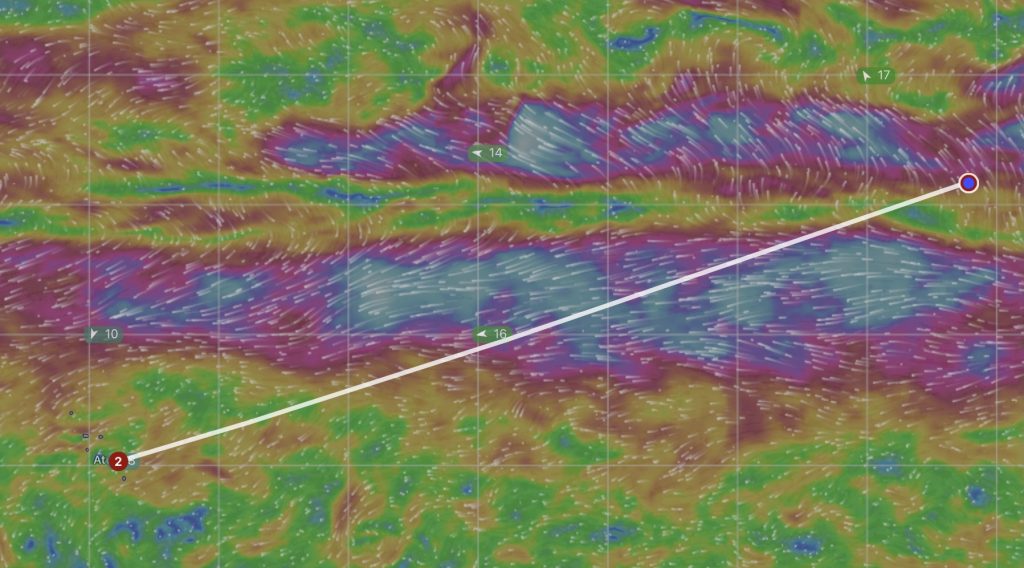
After days of smooth, near-effortless sailing westward in the North Equatorial Current, we are now transitioning across the Equator toward the South Equatorial Current, and traversing the doldrums, the horse-latitudes, squall alley – pick your own name if you will.

Currents around the equator

For a few days there, it looked like the wind had simply lost interest. We had long periods of nothing — not light breeze, not “gentle airs” — just nothing. The kind where sails flap lifelessly, rigging slaps in protest, and you can hear your own heartbeat. Every breath of wind was followed by a squall. Every squall was followed by a wind shift. Every wind shift meant another sail change. And every sail change meant dragging heavy sails around a rolling deck. We motored, quite a lot.

We’re tired. The kind of tired, where even simple decisions take effort and tiny mistakes compound into big ones. Deciding when to reef with squalls about is driven by apprehension, rather than sailing the conditions. I managed to drop the genoa in the water during a sail change. Nearly pumped our diesel overboard while transferring to the main tank.

But… the sea state has mellowed, the South Equatorial Current has taken hold. We’re making miles again.

Winged Hitchhikers of the Galápagos

The Galápagos passed to port with barely a ripple — a distant suggestion of land cloaked in mist and mystery. We didn’t stop, but the islands reached out to us anyway. For several days around mid-to-late April, Sunny Spells became a floating aviary, visited repeatedly by the boldest, most characterful seabirds we’ve ever encountered.

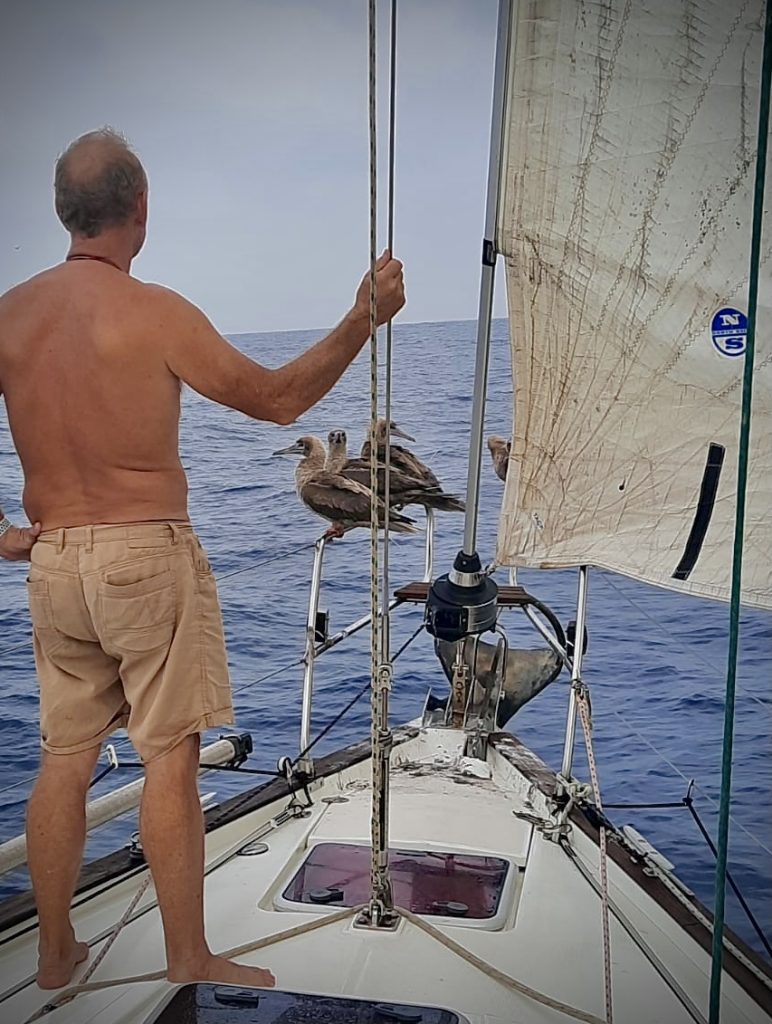
It started innocently enough — a lone booby circling at dusk, then a second one inspecting our wake. Within hours we had a pair roosting on the solar panel frame, bobbing serenely along as though they’d booked passage. Over the next few nights, they were joined by friends. Boobies, noddies, and even what we’re fairly certain were storm petrels all took turns flapping aboard, inspecting the rigging, and claiming corners of the boat as their own.

It quickly became clear these birds knew the drill. They were utterly unfazed by us — not skittish, not cautious, just… entitled. One particular red-footed booby adopted the radar dome as its personal throne, glaring imperiously down at us if we dared speak too loudly or open the companionway hatch too fast.

Of course, with visitors come gifts — and let’s just say the deck wash hose saw more use than usual. Still, it was hard to resent them. Each evening they arrived just before sunset, circled a few times, then flopped onto the solar panels or lifelines for the night. Come dawn, they’d stretch their wings, preen a bit, and launch off into the rising sun, leaving us with feathers, footprints, and the vague sense of having hosted some eccentric but oddly charming stowaways.

There was something surreal about sharing night watches with a dozing booby perched a metre away, rocking gently in time with the swell. At one point we had five aboard, spaced out neatly like ornaments on a Christmas tree — one on the pushpit, one on each side rail, and two on the bimini. All facing forward, as if contemplating the journey with us.

The Galápagos may have been out of reach this time, but the archipelago sent ambassadors. And in their quiet, unruffled way, those seabirds left a deep impression — a reminder that even on an open sea, you’re never truly alone.