Winged Hitchhikers of the Galápagos

The Galápagos passed to port with barely a ripple — a distant suggestion of land cloaked in mist and mystery. We didn’t stop, but the islands reached out to us anyway. For several days around mid-to-late April, Sunny Spells became a floating aviary, visited repeatedly by the boldest, most characterful seabirds we’ve ever encountered.

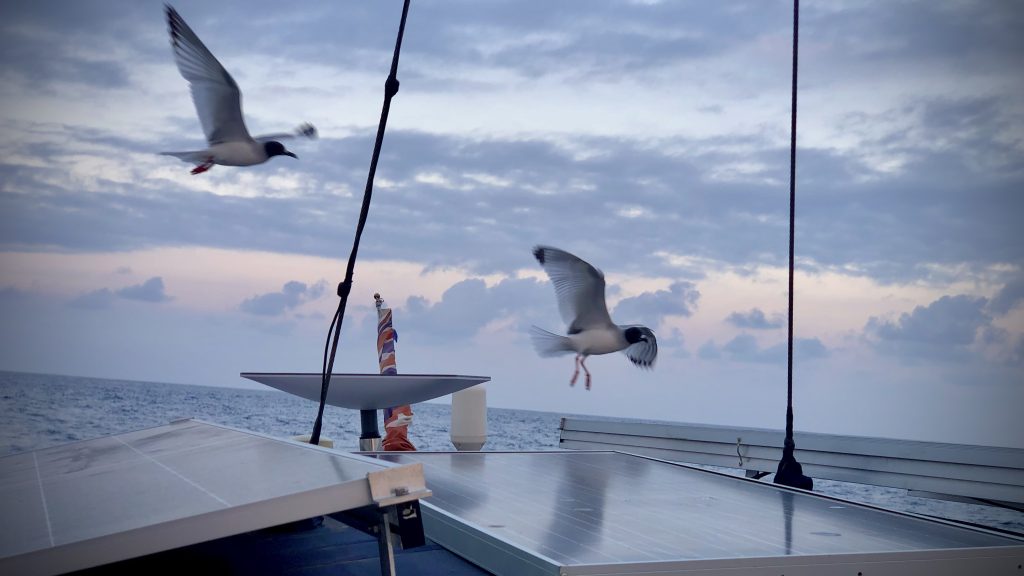
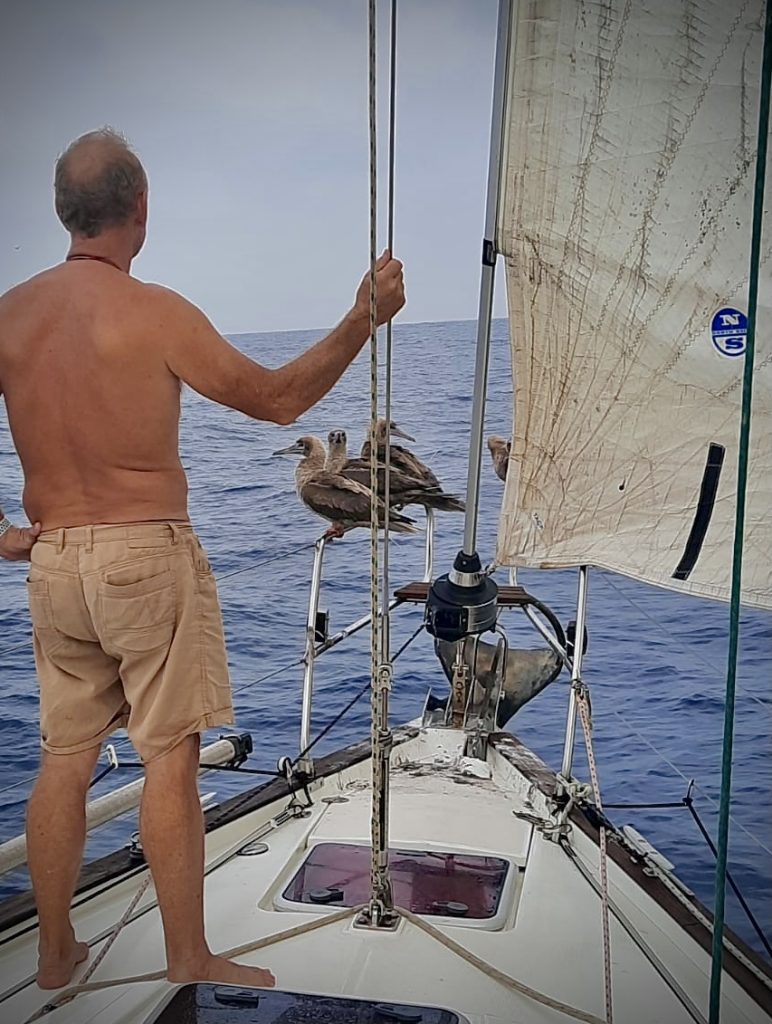
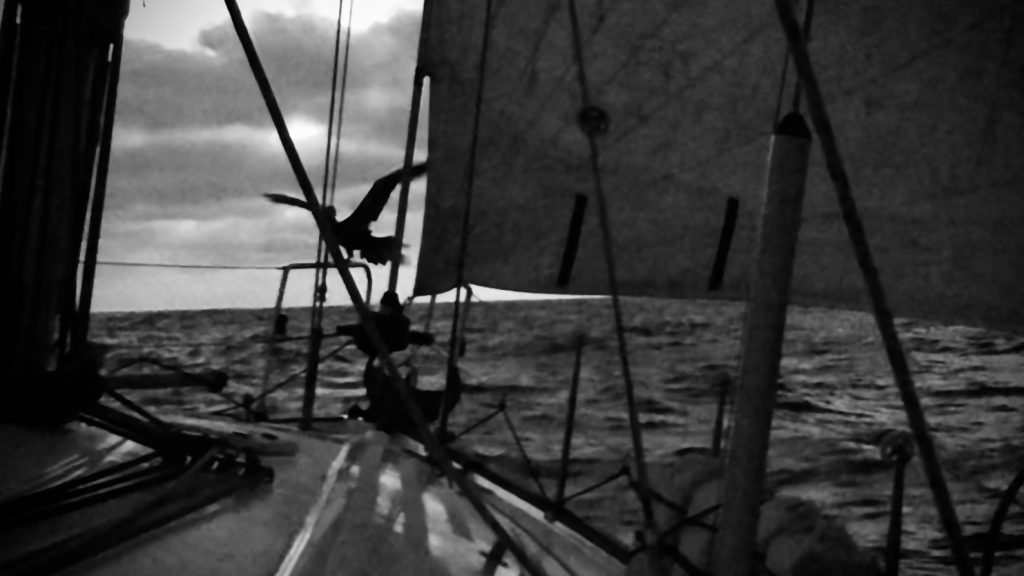
It started innocently enough — a lone booby circling at dusk, then a second one inspecting our wake. Within hours we had a pair roosting on the solar panel frame, bobbing serenely along as though they’d booked passage. Over the next few nights, they were joined by friends. Boobies, noddies, and even what we’re fairly certain were storm petrels all took turns flapping aboard, inspecting the rigging, and claiming corners of the boat as their own.

It quickly became clear these birds knew the drill. They were utterly unfazed by us — not skittish, not cautious, just… entitled. One particular red-footed booby adopted the radar dome as its personal throne, glaring imperiously down at us if we dared speak too loudly or open the companionway hatch too fast.

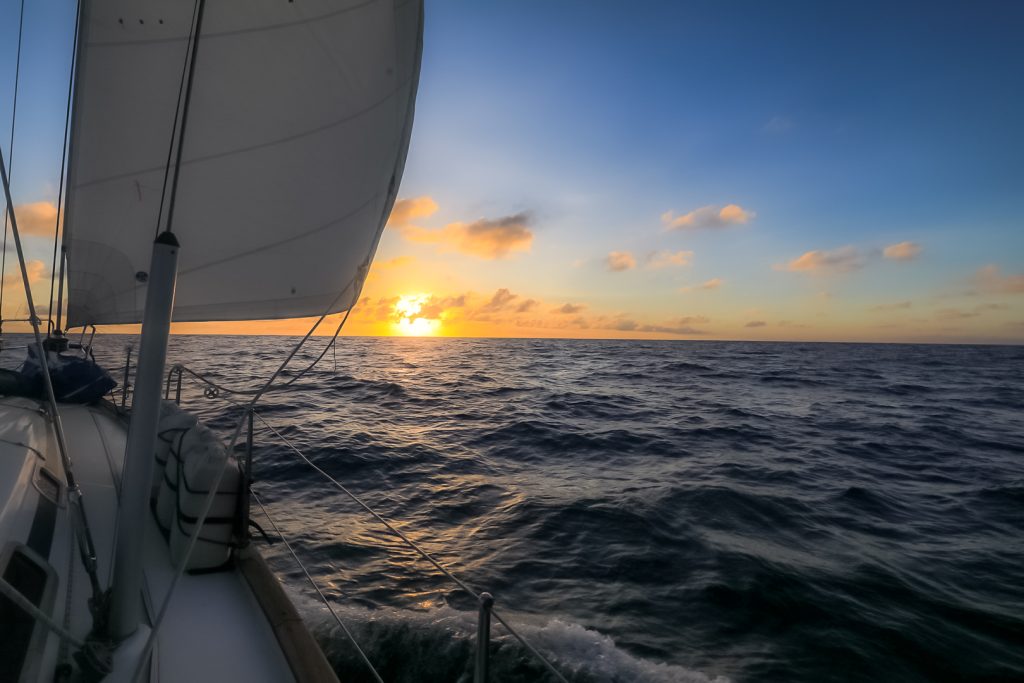
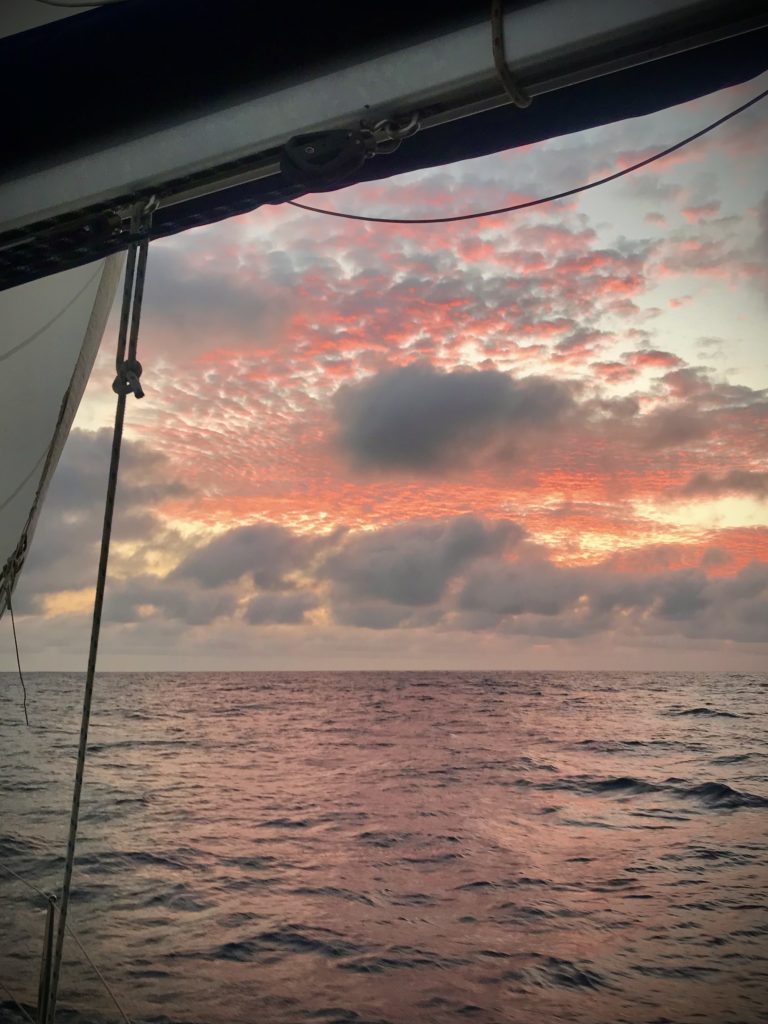
Of course, with visitors come gifts — and let’s just say the deck wash hose saw more use than usual. Still, it was hard to resent them. Each evening they arrived just before sunset, circled a few times, then flopped onto the solar panels or lifelines for the night. Come dawn, they’d stretch their wings, preen a bit, and launch off into the rising sun, leaving us with feathers, footprints, and the vague sense of having hosted some eccentric but oddly charming stowaways.

There was something surreal about sharing night watches with a dozing booby perched a metre away, rocking gently in time with the swell. At one point we had five aboard, spaced out neatly like ornaments on a Christmas tree — one on the pushpit, one on each side rail, and two on the bimini. All facing forward, as if contemplating the journey with us.

The Galápagos may have been out of reach this time, but the archipelago sent ambassadors. And in their quiet, unruffled way, those seabirds left a deep impression — a reminder that even on an open sea, you’re never truly alone.

Current Affairs: Drifting West in Good Company

With the gooseneck repaired and the sails once again doing their thing, we settled into what can only be described as a low-drama westward slide. For a full week, from 17 to 24 April, Sunny Spells glided along in the company of a generous current, light trade winds, and the kind of quiet routine that long passages are made of.

The North Equatorial Current was firmly in our corner, pushing us along with up to 2 knots of extra speed over the ground. Combined with breeze in the 8–12 knot range, we regularly made 6–7 knots without touching a line. Day after day of this — no squalls, no sail changes, no stress. Just reading, firmware tweaking, eating well, and checking how far we’d drifted while asleep.

By the 19th we were deep in “miles quietly earned” mode. The kind of sailing where you forget you’re underway until you check the chartplotter and realize you’ve made 150 miles without trying. No other boats, no land in sight, just the soft hiss of water past the hull and the occasional slap of a lazy swell.

From the 21st onward, we began seeing more signs of equatorial life: a handful of flying fish in the scuppers, a few visits from dolphins, and a rising sense that the Galápagos weren’t impossibly far away anymore. The full moon faded, and the skies turned darker at night, which made for stargazing of the “planetarium” variety. Not bad when you’re brushing your teeth under Orion’s Belt.

By the 23rd and 24th, the wind was softening slightly but the current held steady. Boat speed dropped to the low 5s, but we didn’t mind. With good power from the sun, steady progress west, and an autopilot that hadn’t glitched in days, we were firmly in the groove. We began looking ahead to landfall — not quite in range yet, but real now. It’s a strange transition: watching Galápagos grow from an idea on the horizon into an actual waypoint on the chart.

There will be more drama in time — there always is — but this stretch was a rare treat: seven days of silence, sun, and slow, steady progress west across an empty ocean. We’ll take it.

Of Goosenecks and Galápagos Dreams

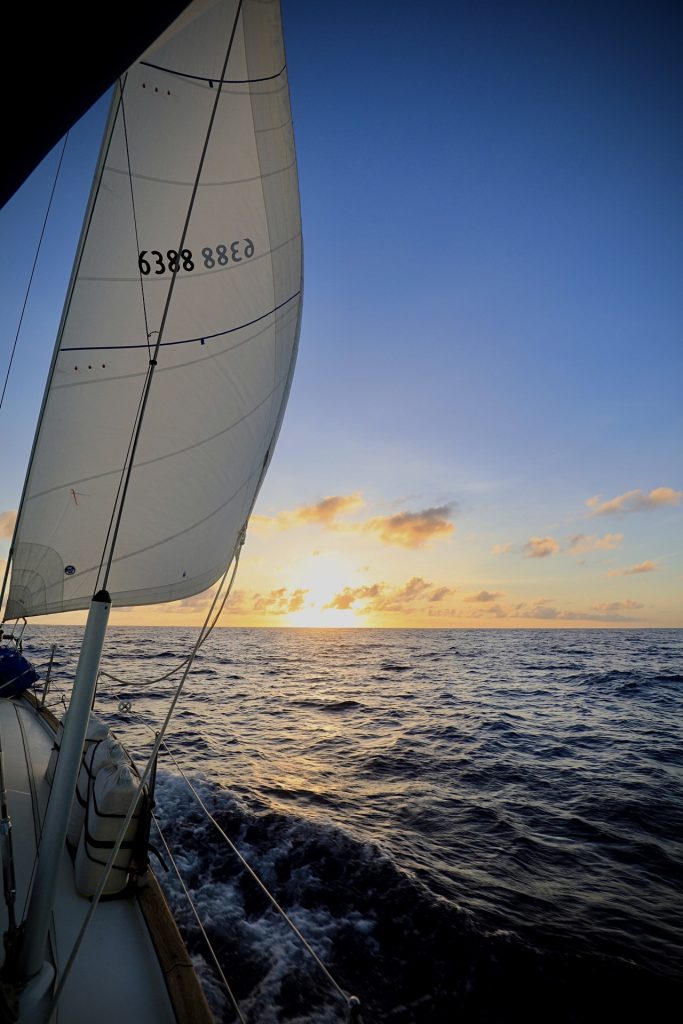
As we were enjoying the sunset this evening, we heard a loud cracking noise from the direction of the mast. On closer inspection it transpired that the 12mm stainless steel pin that holds the gooseneck together had sheared clean off. A disturbing breakage for sure. After rolling the genoa away we brought Sunny Spells head-to-wind and dropped the main. By this time part of the pin had fallen out and the boom was about to fall on the deck!

How lucky that it chose a time when we were drifting with 4 knots of apparent wind and we were there to witness it. As it was getting dark, we just hacked together a temporary fix to secure the boom to the gooseneck and stop it from moving. Our challenge for the next day was to devise a repair that would last 3,543 miles to Nuka Hiva…

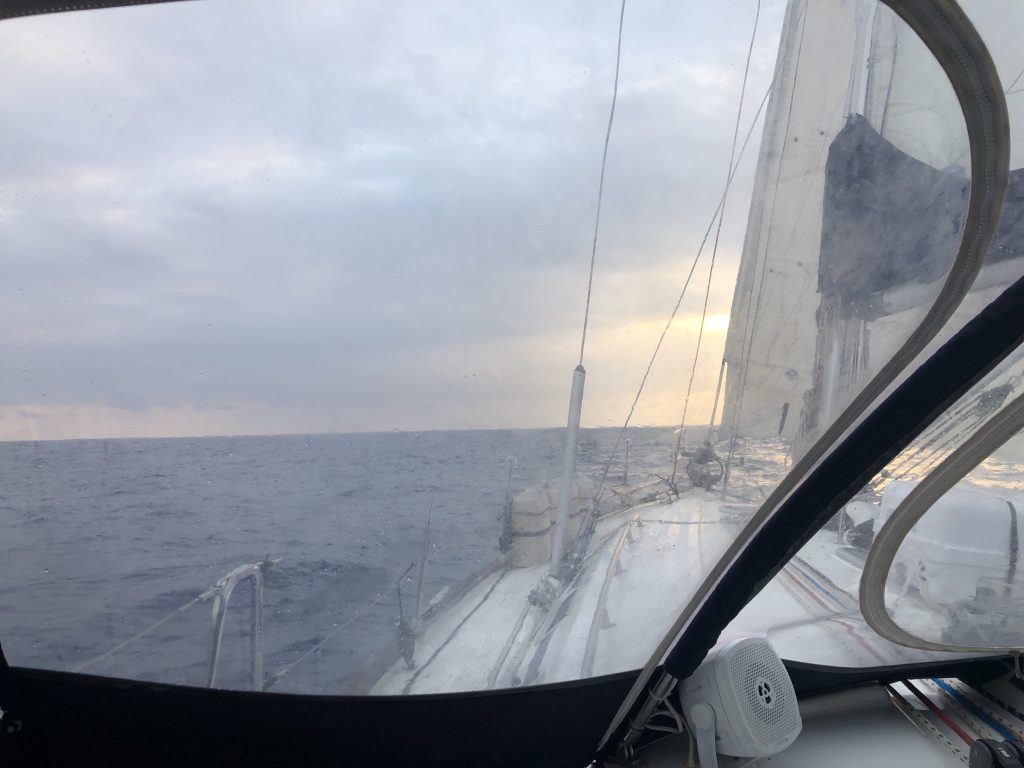
After a slow night, close reaching on the headsail only, we got to work first thing to repair the gooseneck. Crawling along at 4 knots under headsail only when we were faced with at least 4 days of windward sailing was just not an option.

While on night watch I scoured my memory banks trying to remember whether I had something, stowed somewhere, that could be used to replace the broken pin. I had a mental picture of a stainless-steel pin of about the same diameter (1/2 inch) but could not place where it had come from or what it was used for. I eventually decided that, if it in fact existed, it was probably in the box of running rigging fittings in the starboard lazarette. Joy of joys when, on checking this morning, I found a pin, 1/2 in diameter and about 6 inches long in that exact spot. It has a 90-degree bend in one end and holes drilled to take split rings. I recalled that it used to secure the old anchor to the old bow roller when I bought Sunny Spells. It was about 1/2 in too long, but otherwise a perfect fit, with a stack of washers scavenged from other places used to fill the excess length.

Once the replacement pin was fitted we hoisted the main and within half an hour it was blowing 18 knots and we were flying along! Both crew members were pretty relieved!

Breaking Free from the Gulf of Panama

We did not have any time to contemplate the upcoming 4-week passage across the Pacific from Panama to French Polynesia. We had a downwind forecast for the Gulf of Panama and we had to leave. As soon as we were cleared out, we made for Taboga Island where we would spend our last night before leaving for the Marquesas.

We got up just before 6PM and, after a coffee, rigged the two poles ready for our goosewing setup. Just before 7AM we weighed anchor and motored out of the Taboga anchorage. The wind was light but soon picked up to around 12 knots on the starboard quarter, allowing us to glide along at 6 to 7 knots on a calm sea, with 4,000 miles to go to the Marquesas.

The wind veered a bit more west and we were on a dead run directly for our next waypoint. Six or seven other boats all left various anchorages and marinas around Panamá City at the same time, not that it’s a race or anything.

With sunny weather we were able to make water, run the StarLink and bring our batteries to 100% by 2PM. We were running the fridge and freezer flat out to bank some energy for the night.

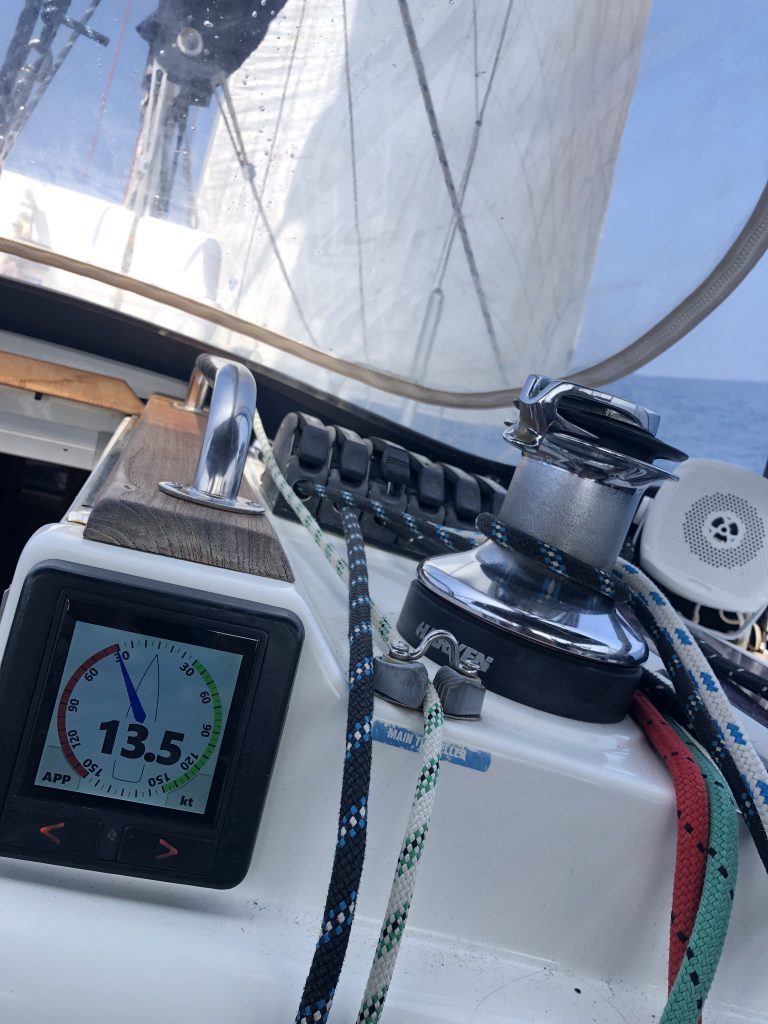
As forecast, the wind picked up around 6PM and was soon blowing around 20 knots from the north. Sunny Spells accelerated and we were soon hitting 10 knots plus over the ground, helped along by 2 knots of current. We’ve averaged almost exactly 10 knots during the night. The sea state took a turn for the worse, of course, but it was still pretty benign, compared to what we had in the Atlantic or the Caribbean Sea.

By the morning of the 14th we were south of the Las Perlas Islands, sailing in company with a few boobies and a curious dolphin. Winds remained workable, and by mid-morning we were close reaching at 5 to 6 knots, enjoying the last of the coastal current before it turned against us. With no need to trim and just the two of us aboard, watches flowed into meals, naps, and stargazing shifts under a gentle, cloudless sky.

We rounded Punta Mala in the early hours of the 15th. True to its name, it offered a short punch of uncomfortable chop and some inconsistent breeze, but nothing that warranted complaint. We had expected worse. Once around the point, the wind backed slightly and we bore away, finally turning west and leaving the Gulf of Panama behind us.

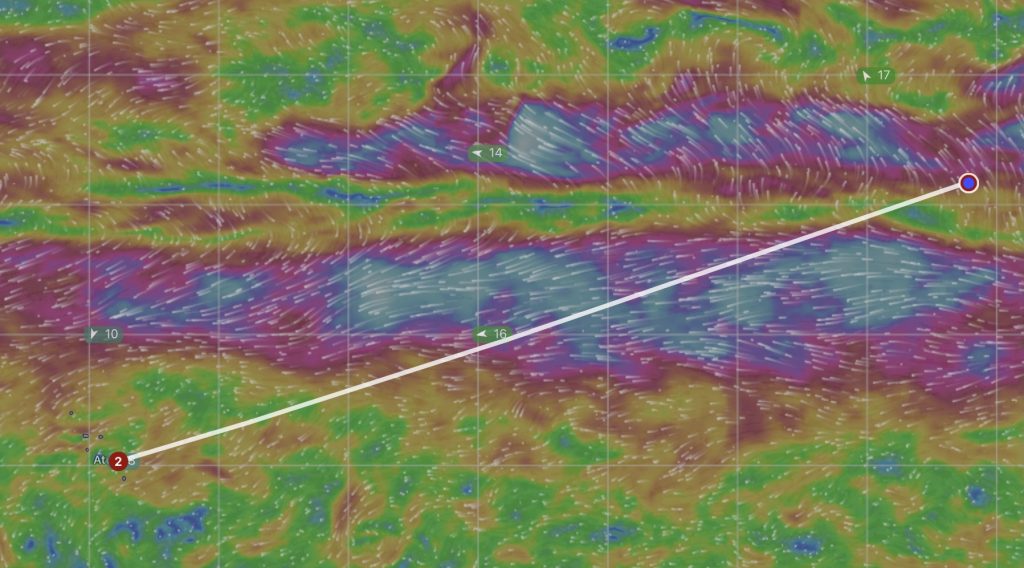
The air feels different now. Lighter. The next waypoint is south-east of Galápagos where we expect to turn west and pick up the trades